

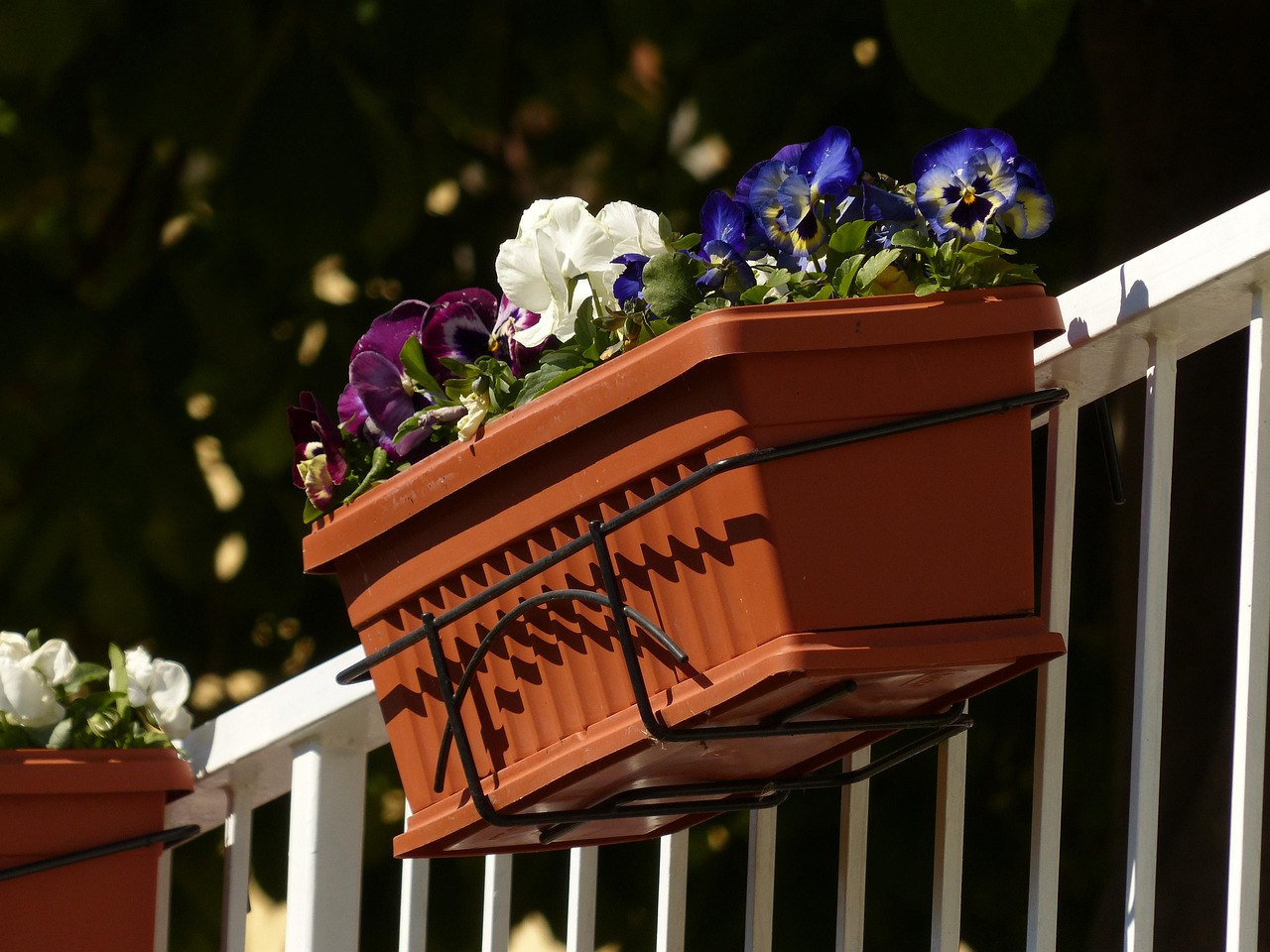
A railing planter hangs its weight on your parapet rail, so the rail decides whether it fits — not the size of the balcony, not the size of the plant. One measurement settles it: the width of the rail across the top.
The number to take
The railing boxes we stock take a flat or round rail up to roughly 60 mm across. Measure the widest part with a tape, not a finger span. If your rail is wider than that, a bracket will sit open and the box will rock the first time the wind gets under it.
Three parapets that will not take one
- A solid concrete parapet. Nothing to clip on to. Use a free-standing pot on the ledge, set back from the edge.
- A glass balustrade. Same problem, plus you should not be clamping to structural glass.
- A rail with a thick top cap or a handrail moulding. Measure the cap, not the tube underneath it.
Loading it
Wet soil is heavy. Fill a railing box on the rail, not on the floor, and put the heavy end of the load over the brackets rather than at the ends. If your building has an outward-facing rule about planters overhanging the street side, hang it inward; we have had more than one order changed for exactly that reason.